
Pelvic organ prolapse can feel worrying and unfamiliar, especially when symptoms first appear. Many people describe a sensation of heaviness, pressure or something “not feeling quite right” in the pelvic area.
At The Pelvic Health Studio in Marylebone, we provide specialist physiotherapy to support individuals with pelvic organ prolapse. Our approach focuses on improving pelvic floor function, reducing symptoms and helping you feel more confident in your body.
Pelvic organ prolapse is a common condition, particularly after pregnancy, childbirth or during menopause. With the right support and guidance, many people are able to manage symptoms effectively and continue with normal daily activities.
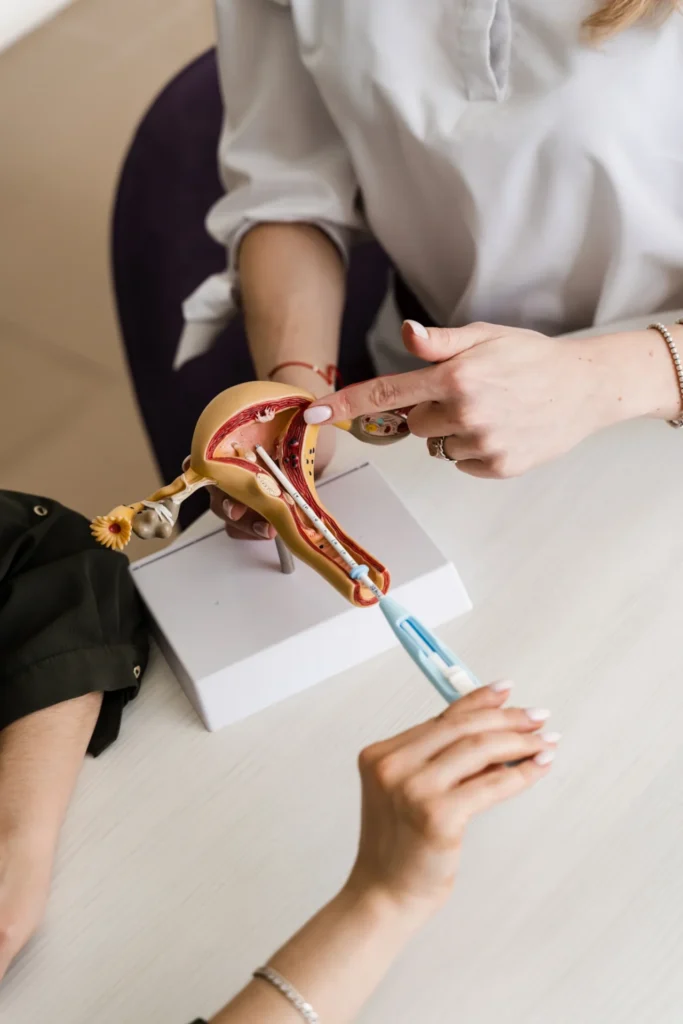
Pelvic organ prolapse occurs when one or more of the pelvic organs, such as the bladder, uterus or bowel, move downward due to reduced support from the pelvic floor muscles and surrounding tissues.
The pelvic floor acts as a supportive layer at the base of the pelvis. When these muscles become weakened or less supportive, the organs they hold in place may shift.
There are different types of prolapse, including:
The severity can vary, and symptoms are not always directly related to the degree of prolapse.
Pelvic organ prolapse can affect women at different stages of life.
You may be more likely to experience symptoms if you:
While it is more common in women, support is available at any stage and symptoms can often be improved with the right treatment.
At our Marylebone clinic, we commonly support women experiencing:
Symptoms may fluctuate throughout the day and can be influenced by activity levels and fatigue.
Your appointment begins with a detailed conversation about your symptoms, lifestyle and medical history. This helps your physiotherapist understand how prolapse is affecting you.
Your assessment may include:
Following this, your practitioner will explain the findings clearly and create a personalised treatment plan.
Physiotherapy is considered a first-line treatment for many cases of pelvic organ prolapse.
Treatment may help you:
Many women find that understanding how to support their body makes a significant difference.
The Pelvic Health Studio in Marylebone provides specialist care for pelvic health conditions in a calm and supportive environment.
Patients choose us because:
We understand that prolapse can feel worrying, and we are here to support you with expert care.
Many women experience improvement in symptoms with structured physiotherapy and lifestyle adjustments.
Progress depends on factors such as the severity of symptoms, muscle function and daily activity patterns.
Treatment focuses on improving support through the pelvic floor, as well as helping you adapt movement and activity to reduce strain.
With consistent guidance and support, many patients feel more comfortable, confident and able to continue with their normal routines.
It can feel concerning, but many cases can be managed effectively with physiotherapy and lifestyle changes.
Not always. Many people benefit from conservative treatment such as physiotherapy.
Yes, but some activities may need to be adapted. We can guide you on safe options.
With the right support, progression can often be managed or slowed.
If you are experiencing symptoms of pelvic organ prolapse, specialist assessment can help you understand your condition and explore treatment options.
At The Pelvic Health Studio in Marylebone, we provide personalised physiotherapy designed to improve support, reduce symptoms and restore confidence.
Book your appointment today and take the next step towards feeling more supported and comfortable.
Connect with us!
Lets get started
We and our partners, including Google, use cookies and personal data to analyse traffic and for ads personalisation and measurement. You can accept, reject or choose which cookies to allow. Privacy Policy • Cookie Policy • Terms & Conditions • Google Privacy
We use cookies to help you navigate efficiently and perform certain functions. You can choose which categories to allow below. Cookies categorised as Necessary are always active.
We also use third-party cookies for analytics and advertising. These are only stored with your consent. You can update or withdraw consent at any time via the cookie icon at the bottom-left. This site operates under UK GDPR, the Data Protection Act 2018, and the Privacy and Electronic Communications Regulations (PECR). Cookie Policy • Privacy Policy
Necessary cookies are required for core site features including security, network management, and consent storage.
| Cookie | Duration | Description |
|---|---|---|
hmdg_cookie_consent | 180 days | Stores your cookie consent preferences. |
PHPSESSID | Session | WordPress session identifier. |
wordpress_logged_in_* | Session | WordPress login authentication. |
Functional cookies enable enhanced features such as live chat and remembering preferences.
| Cookie | Duration | Description |
|---|---|---|
wp-settings-* | 1 year | Stores user interface preferences. |
Analytics cookies help us understand visitor behaviour. Controls analytics_storage for Google Analytics 4.
| Cookie | Duration | Description |
|---|---|---|
_ga | 2 years | Google Analytics — distinguishes users. |
_ga_* | 2 years | Google Analytics 4 — session persistence. |
_gid | 24 hours | Google Analytics — distinguishes users. |
_gat | 1 minute | Google Analytics — throttles request rate. |
Performance cookies collect aggregate, anonymous data about site performance.
| Cookie | Duration | Description |
|---|---|---|
_gat_gtag_* | 1 minute | Google Tag Manager — rate throttle. |
Marketing cookies track visits to deliver relevant ads. Controls ad_storage, ad_user_data, and ad_personalization.
| Cookie | Duration | Description |
|---|---|---|
_gcl_au | 90 days | Google Ads — conversion tracking. |
_gcl_aw | 90 days | Google Ads — click attribution. |
_gac_* | 90 days | Google Ads — campaign information. |
IDE | 1 year | Google DoubleClick — ad targeting. |
Powered by HMDG • Cookie Policy